Pharmaceutical, biotech and medtech companies run on relationships: with healthcare professionals (HCPs), patients, research sites and partners. When those relationships are tracked across disconnected tools, field teams repeat work, patient programs lose track of follow-ups, and leaders lack a reliable view of what is happening.
Salesforce Life Sciences Cloud brings these relationships onto one platform. It connects HCP engagement, patient services and clinical operations, with Salesforce Data Cloud and Agentforce AI built in. This guide covers what Life Sciences Cloud is, its key capabilities, how it compares with Veeva, and how to plan a successful implementation.
Note: Life Sciences Cloud is not a replacement for validated systems such as a clinical trial management system (CTMS), electronic data capture (EDC), safety/pharmacovigilance or electronic health records (EHR). It works alongside them through integration.
What Is Salesforce Life Sciences Cloud?
Salesforce Life Sciences Cloud is Salesforce’s industry solution for pharmaceutical, biotechnology and medical technology companies. It gives commercial, medical, patient services and clinical operations teams a shared platform for managing stakeholders, programs and workflows.
It is built on the core Salesforce platform, so it inherits standard CRM, automation, reporting and security features. It also uses Data Cloud to unify data from other systems and Agentforce to add AI agents to everyday work.
Life Sciences Cloud vs Health Cloud
The two are often confused, but they serve different organizations:
| Consideration | Life Sciences Cloud | Health Cloud |
| Built for | Pharma, biotech, medtech | Hospitals, clinics, payers, care providers |
| Core focus | HCP engagement, patient programs, clinical operations | Care coordination, patient records, provider networks |
| Typical users | Field reps, medical affairs, patient services, clinical ops | Care teams, care coordinators, member services |
Key Capabilities of Salesforce Life Sciences Cloud
- Customer Engagement for HCP Teams : Field reps and key account managers get a complete view of each HCP and account, including past interactions, preferences and open activities. Teams can plan calls, log visits, manage samples and coordinate omnichannel outreach from one place. Medical science liaisons can track scientific exchanges separately from commercial activity.
- Patient Services and Program Management : Patient support programs cover enrollment, consent, benefits verification, adherence support and follow-ups. Life Sciences Cloud lets teams run these programs on structured workflows, so every patient interaction is recorded and every hand-off has an owner. Consent and communication preferences are captured centrally and respected across channels.
- Clinical Operations Support : Clinical teams can use Life Sciences Cloud to support site selection and participant recruitment and enrollment. A connected view of sites, investigators and candidates helps teams find the right partners faster and track recruitment progress against targets.
- Workflow Automation : Salesforce Flow automates routine work such as task assignment, approvals, reminders and escalations. Automations are designed around your real processes, with clear ownership and controlled handling of exceptions.
- Unified Data with Data Cloud : Data Cloud brings together information from CRM, ERP, specialty pharmacies, hubs, research platforms and marketing systems. Teams work from a single, consistent profile instead of reconciling records across systems.
- Reporting and Dashboards : Configurable reports and dashboards show engagement levels, program performance, open tasks and recruitment progress. Managers can see where attention is needed and act on it quickly.
Use Cases for Pharma, Biotech and MedTech Companies
- HCP engagement and field force management: Give reps a 360-degree view of HCPs and accounts, plan territory activity, and coordinate in-person, email and virtual interactions.
- Patient support programs: Manage enrollment, consent, adherence reminders and case follow-ups so patients start and stay on therapy.
- Medical affairs: Track MSL interactions, medical inquiries and scientific exchanges, separated from promotional activity.
- Key account management: Coordinate commercial, medical and market access teams around priority hospitals and health systems.
- Clinical trial recruitment: Support site selection and participant enrollment, and monitor progress against recruitment targets.
- MedTech sales and service: Manage device accounts, product inquiries and service cases across sales and support teams.
Clinical Trials: Where Life Sciences Cloud Fits
Life Sciences Cloud strengthens the relationship side of clinical research: finding sites, engaging investigators, recruiting participants and keeping everyone informed. Recruitment is one of the most common causes of trial delays, so better visibility here has a direct impact on timelines.
It does not replace your validated research systems. Clinical data capture, safety reporting and regulatory submissions stay in your CTMS, EDC and pharmacovigilance platforms. The value comes from connecting these systems so clinical teams see one consistent picture of site and participant activity.
Data, Integration and Compliance
Life sciences companies run many systems: ERP, marketing automation, specialty pharmacy and hub data, research platforms and data warehouses. A clear integration plan lets Life Sciences Cloud work alongside them without disruption.
Integration
Salesforce connects to other systems through standard APIs, MuleSoft and prebuilt connectors. For each integration, decide which system owns the data, how often it syncs and how errors are handled. Clean duplicate and incomplete records before migration, and set validation rules to keep data quality high afterwards.
Compliance and Data Protection
Salesforce provides strong security controls, including role-based access, field-level security, field audit history and encryption options. These controls support compliance, but no platform makes an organization compliant on its own.
Your implementation should account for:
- Access and permissions aligned to job roles
- Consent and privacy rules for patient and HCP communications (HIPAA, GDPR and local regulations, as applicable)
- Audit and record retention requirements
- Validation and change control where regulated processes are involved
Involve legal, security, privacy and regulatory stakeholders early in the design.
Salesforce Life Sciences Cloud vs Veeva Vault CRM
Many pharmaceutical companies evaluating Salesforce Life Sciences Cloud are current or former Veeva customers. Veeva CRM was historically built on the Salesforce platform. Veeva has since developed Vault CRM on its own Vault platform, while Salesforce offers its own life sciences CRM solution.
| Consideration | Salesforce Life Sciences Cloud | Veeva Vault CRM |
| Platform | Salesforce platform | Veeva Vault platform |
| Breadth | Life sciences workflows integrated with Salesforce products, Data Cloud, MuleSoft and other enterprise capabilities | Deep life sciences functionality integrated with Veeva’s commercial, clinical, regulatory and quality ecosystem |
| AI | Agentforce AI agents and Salesforce AI capabilities | Veeva’s own AI initiatives focused on life sciences workflows |
| Integration | AppExchange, MuleSoft, Salesforce Flow and existing Salesforce investments | Deep integration with the Veeva ecosystem; existing Salesforce-based customizations may require rework |
| Compliance | Supports regulated workflows through Salesforce security, audit and validation capabilities | Supports regulated workflows through Veeva’s life sciences-focused platform and validation capabilities |
| Best fit | Organizations seeking broader enterprise integration and flexibility across Salesforce products | Organizations with significant Veeva investment that prioritize specialized life sciences functionality |
The right choice depends on your existing systems, contract timelines, integration requirements and long-term platform strategy. A structured assessment of functional requirements, migration effort, regulatory needs and total cost of ownership can help determine the best fit.
Important note:Veeva’s transition from its legacy Salesforce-based CRM to Vault CRM is ongoing. Existing customers should assess their migration plans and timelines individually.
AI and Agentforce in Life Sciences
Agentforce is Salesforce’s AI agent platform, available across Salesforce products. In Life Sciences Cloud, it can help teams with tasks such as:
- Preparing reps for HCP visits with summaries of past interactions
- Drafting follow-up communications for review
- Answering routine patient program inquiries
- Surfacing next-best actions for field and patient services teams
In regulated settings, AI needs clear guardrails. Outputs should be reviewed by qualified staff, and AI should never replace clinical judgment or established safety procedures. The Einstein Trust Layer helps protect sensitive data when AI is used.
Implementation Best Practices
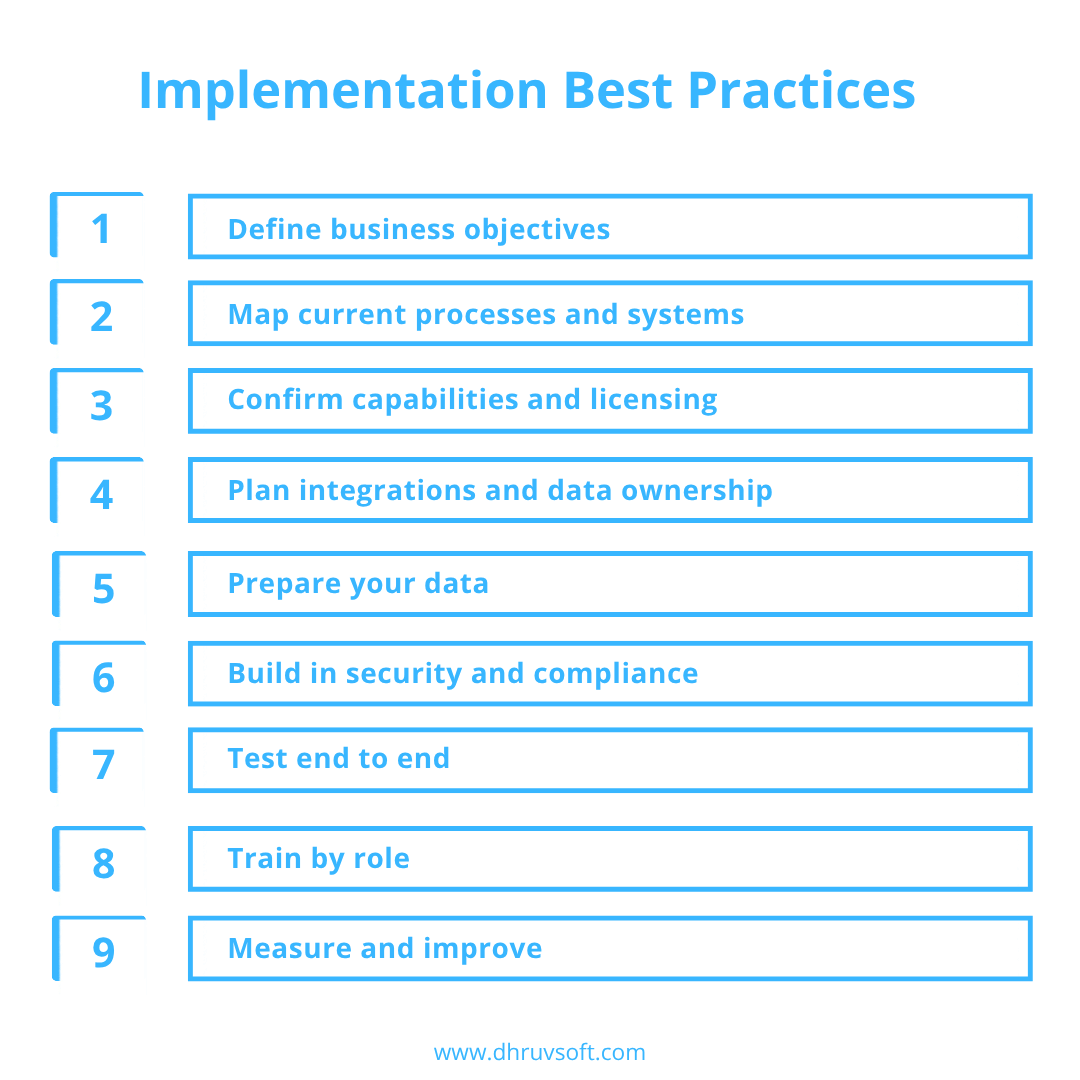
- Define business objectives. Set measurable goals for engagement, program performance, data quality or recruitment.
- Map current processes and systems. Document how teams work today, where data lives and where manual work slows them down.
- Confirm capabilities and licensing. Match each requirement to Life Sciences Cloud features, add-ons or integrations.
- Plan integrations and data ownership. Decide which system owns each data type and how often it syncs.
- Prepare your data. Clean, deduplicate and validate records before migration.
- Build in security and compliance. Involve privacy, legal and regulatory stakeholders in access, consent and validation decisions.
- Test end to end. Validate normal workflows, failed integrations and exception scenarios before go-live.
- Train by role. Give reps, patient services, medical and clinical teams training focused on their daily work.
- Measure and improve. Track agreed metrics after launch and prioritize improvements based on real usage.
How Dhruvsoft Can Help
Dhruvsoft helps pharma, biotech and medtech companies plan, implement and optimize Salesforce Life Sciences Cloud. We design solutions around your business processes, data and regulatory requirements, not around generic templates.
Our services include:
- Requirements assessment and solution design
- Life Sciences Cloud configuration for HCP engagement, patient services and clinical operations
- Data Cloud setup and data migration
- Integration with ERP, marketing, research and data platforms
- Agentforce use-case design and deployment
- Testing, role-based training and post-launch optimization
We also support organizations evaluating a move from Veeva to Salesforce, from initial assessment through migration.
Conclusion
Salesforce Life Sciences Cloud gives pharma, biotech and medtech companies one platform for HCP engagement, patient services and clinical operations. Combined with Data Cloud and Agentforce, it replaces scattered tools with connected data and coordinated workflows.Success depends on clear objectives, clean data, well-planned integrations and strong compliance controls. Start with your most pressing business challenges, and build from there.
Frequently Asked Questions
1. What is Salesforce Life Sciences Cloud?
It is Salesforce’s industry solution for pharma, biotech and medtech companies. It supports HCP engagement, patient services programs and clinical operations on the Salesforce platform, with Data Cloud and Agentforce built in.
2. What is the difference between Life Sciences Cloud and Health Cloud?
Life Sciences Cloud is built for companies that develop and sell therapies and devices. Health Cloud is built for healthcare providers and payers that deliver and manage care.
3. What are the main benefits of Life Sciences Cloud?
Teams get one view of HCPs, patients and sites, structured workflows for programs and follow-ups, unified data through Data Cloud, and AI assistance through Agentforce.
4. Can Life Sciences Cloud manage clinical trials?
It supports site selection and participant recruitment and enrollment. Clinical data capture, safety reporting and regulatory submissions remain in dedicated validated systems, which can be integrated with Salesforce.
5. How does Life Sciences Cloud compare with Veeva?
Veeva offers a life sciences-only suite on its Vault platform. Salesforce combines life sciences CRM with Data Cloud, Agentforce, Marketing Cloud and MuleSoft on one platform. The better fit depends on your existing systems and platform strategy.
6. Does Life Sciences Cloud make us compliant with HIPAA or GDPR?
No platform guarantees compliance on its own. Salesforce provides security, audit and encryption controls, but your organization must configure them correctly and maintain the required processes.
7. Can it integrate with our existing systems?
Yes. Salesforce integrates through APIs, MuleSoft and prebuilt connectors. The effort depends on your source systems, data formats and security requirements.
8. How long does implementation take?
It depends on scope, number of integrations, data readiness and customization. A requirements assessment is the best way to set a realistic timeline.
9. Why choose Dhruvsoft for Life Sciences Cloud implementation?
Dhruvsoft combines Salesforce implementation expertise with experience in life sciences processes, data and compliance requirements. We cover the full lifecycle, from assessment and design to integration, training and ongoing optimization.
Ready to Explore Salesforce Life Sciences Cloud?
Contact Dhruvsoft to discuss your requirements. Our team will assess your current systems and recommend a practical path to implementation. Talk to a Salesforce Life Sciences Expert
 About Ramu Chiluka


